
The Power of Small Steps: How Consistent Effort Creates Extraordinary Success
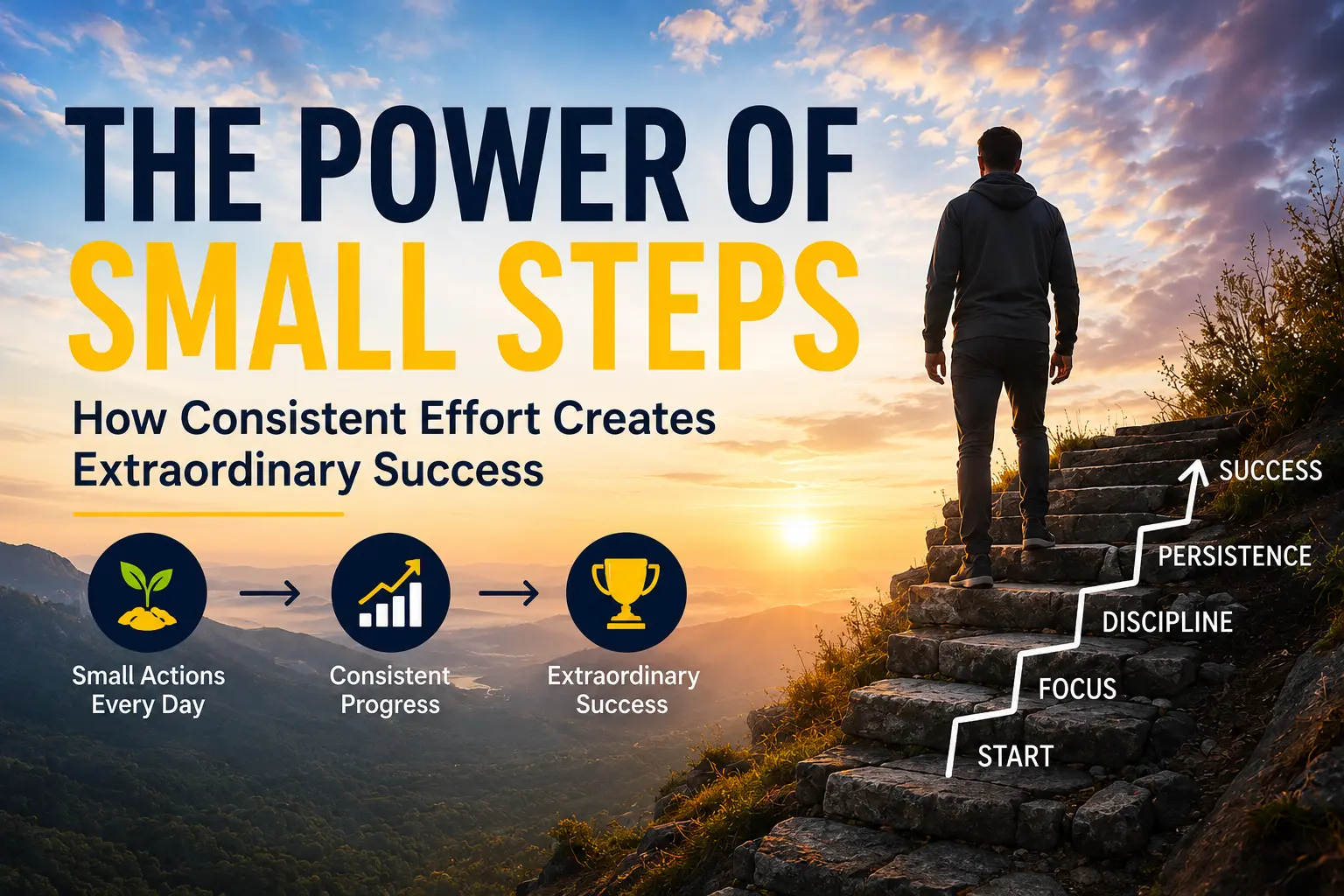
The Power of Small Steps: How Consistent Effort Creates Extraordinary Success
We live in a world where success stories often make achievement look instant. Social media showcases people reaching major milestones, building successful businesses, or transforming their lives seemingly overnight. What we rarely see, however, are the countless small actions, sacrifices, and moments of persistence that made those achievements possible. The reality is that most success is not built through one life-changing moment but through hundreds of small decisions made consistently over time.
Many people set ambitious goals at the beginning of a new year, month, or even week. They dream about becoming healthier, wealthier, more productive, or more fulfilled. Yet after a short period, many lose momentum because the distance between where they are and where they want to be feels overwhelming. The challenge isn't usually a lack of desire; it's trying to make massive changes too quickly. That's where the power of small steps comes in.
Small steps may seem insignificant when viewed individually, but their impact becomes extraordinary when repeated consistently. Think about a person who decides to read just ten pages a day. At first, it doesn't seem like much. However, over the course of a year, that simple habit can result in dozens of completed books and a wealth of new knowledge. The same principle applies to exercise, saving money, learning new skills, or building a business. Progress compounds over time, and small actions eventually create remarkable results.
One reason people underestimate small steps is because they focus too much on immediate outcomes. Human beings naturally want quick rewards. When we don't see instant results, we often assume our efforts aren't working. However, growth rarely happens in a straight line. Most meaningful achievements develop quietly beneath the surface before becoming visible. Just as a tree spends years developing strong roots before reaching impressive heights, personal success often requires patience and consistent effort before breakthroughs occur.
Another important factor is mindset. People who achieve long-term success understand that perfection is not required. They recognize that some days will be more productive than others and that setbacks are a normal part of the journey. Instead of allowing mistakes to derail their progress, they focus on getting back on track as quickly as possible. They understand that missing one workout, making one bad decision, or experiencing one failure does not define their future. What matters most is continuing to move forward.
Consistency is often more valuable than intensity. Many individuals begin new projects with enormous enthusiasm, only to burn out after a few weeks. Sustainable success comes from creating habits that can be maintained over months and years. A person who exercises for twenty minutes every day will often achieve better results than someone who spends several exhausting hours in the gym once a month. Likewise, a business owner who makes steady improvements each week is more likely to succeed than someone waiting for the perfect opportunity.
The science behind habit formation supports this idea. Repeated actions strengthen neural pathways in the brain, making behaviors easier and more automatic over time. In simple terms, the more often you perform a positive action, the less effort it takes to continue doing it. This is why successful people place so much emphasis on routines. They don't rely entirely on motivation because motivation comes and goes. Instead, they build systems that help them stay consistent even when they don't feel inspired.
Fear is another obstacle that prevents many people from taking the first step. Fear of failure, criticism, rejection, or disappointment can keep individuals stuck in place. Yet every successful person has experienced failure at some point. Entrepreneurs launch businesses that don't work. Athletes lose competitions. Writers receive rejection letters. The difference is that successful people view failure as feedback rather than a final verdict. They learn from setbacks, adjust their approach, and continue moving forward.
Personal growth also creates a ripple effect that extends beyond the individual. When you commit to becoming better, you naturally influence the people around you. Your discipline inspires others to pursue their goals. Your resilience demonstrates that challenges can be overcome. Your positive attitude encourages friends, family members, and colleagues to believe in their own potential. In this way, self-improvement becomes more than a personal journey—it becomes a source of inspiration for others.
If you want to create lasting change in your life, start by focusing on what you can do today rather than worrying about where you'll be years from now. Set clear goals, break them into manageable actions, and commit to showing up consistently. Celebrate small victories along the way because they are proof that progress is happening. Remember that every expert was once a beginner, every success story started with uncertainty, and every major achievement began with a single step.
The path to success is rarely glamorous. It is often built through quiet effort, patience, and persistence. While others search for shortcuts, those who embrace the power of small steps steadily move closer to their goals. Over time, these small actions accumulate, creating confidence, experience, and momentum that become impossible to ignore.
Success does not belong only to the most talented or the most fortunate. It belongs to those who keep going, even when progress feels slow. It belongs to those who understand that greatness is built one decision, one habit, and one step at a time. No matter where you are today, remember that your future can be transformed by the actions you choose to take right now. Start small, stay consistent, and trust the process. The results may surprise you.

Comments (0)